© Ujjawal Solanki | All Rights Reserved



I am Ujjawal Solanki, a dedicated software developer with expertise in full-stack development, React applications, and Node.js backend services. I create innovative, scalable, and user-friendly web applications.
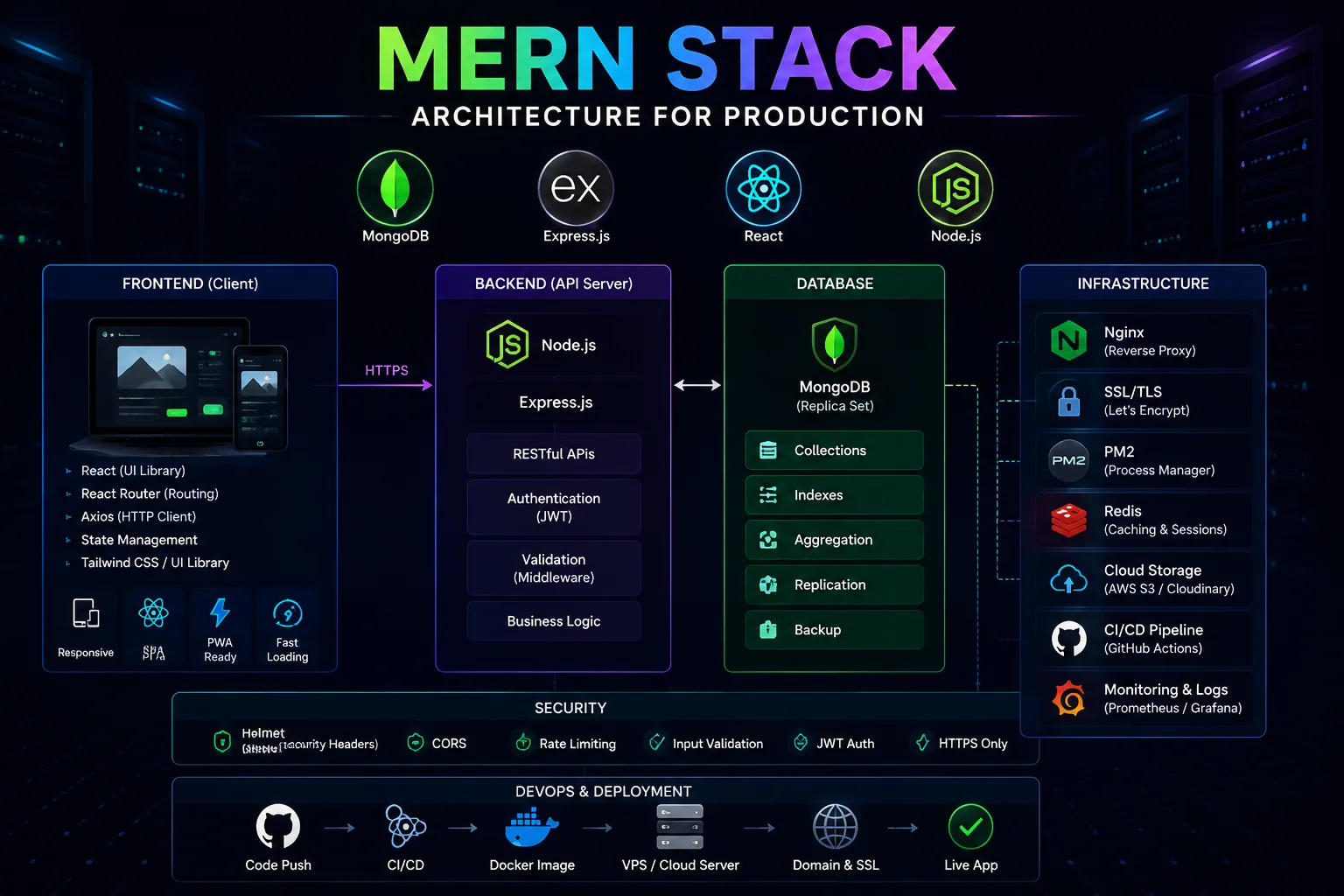
My early MERN apps all shared the same hidden architecture: momentum. I was moving fast, which felt productive, but the structure underneath depended too much on my memory.
That worked while the project was still living inside my head. The moment features multiplied, my shortcuts turned into traps. A small role change touched auth, routes, UI state, and database logic in ways I had not separated properly.
Architecture stopped sounding like a big-company word the day I spent two days untangling a feature that should have taken two hours.
The frontend fetched data in multiple styles. The backend mixed HTTP concerns with business logic. Shared assumptions lived in comments, not code.
Nothing was technically impossible to change. It was just emotionally expensive to change anything.
Good architecture does not exist to impress senior engineers. It exists so small changes stay small.
I stopped chasing perfect architecture diagrams and focused on clear responsibilities. The app became easier to grow the moment each layer had one main job.
In my rushed projects, React components knew too much about backend quirks, and backend routes knew too much about specific screen behavior.
Now I keep contracts cleaner. The frontend asks for data in consistent formats. The backend returns those formats without leaking internal chaos.
If user permissions, billing rules, or project membership rules live only inside controllers, reuse becomes painful fast.
A service layer is not over-engineering when it prevents duplicated logic across routes, jobs, and future integrations.
async function createProjectForUser(userId, input) {
  if (!input.title?.trim()) {
    throw new Error('Title is required');
  }

  return Project.create({
    ownerId: userId,
    title: input.title.trim(),
    description: input.description || ''
  });
}One of the messiest forms of architecture debt is scattered environment access. If every file reaches into `process.env` differently, deployment and debugging both get harder.
export const config = {
  port: Number(process.env.PORT || 5000),
  mongoUri: process.env.MONGO_URI || '',
  jwtSecret: process.env.JWT_SECRET || ''
};A route-level auth middleware is only the start. Production architecture also needs clear rules for roles, ownership, and cross-team consistency.
The moment I centralized these checks, both security and developer confidence improved.
Logs, error handling, and restart behavior feel boring right up until a release breaks at midnight.
Production-ready does not mean huge monitoring platforms on day one. It means enough visibility to explain what the app is doing when users need answers.
app.use('/api/auth', authRoutes);
app.use('/api/projects', projectRoutes);
app.use('/api/tasks', taskRoutes);
app.use(errorHandler);
function ProjectListPage() {
const { data, loading, error } = useProjects();
if (loading) return Perfect architecture is a myth. Clear architecture is enough to ship, hand off, and sleep.
I ask whether the pattern reduces future confusion or just makes me feel more advanced. That one question has saved me from a lot of elegant nonsense.
Production architecture is not about having the most layers. It is about having the right boundaries so growth adds features instead of fear.
If this helped you, save it for later. And if you are stuck on a MERN feature, you can always reach out to me.
© Ujjawal Solanki | All Rights Reserved